
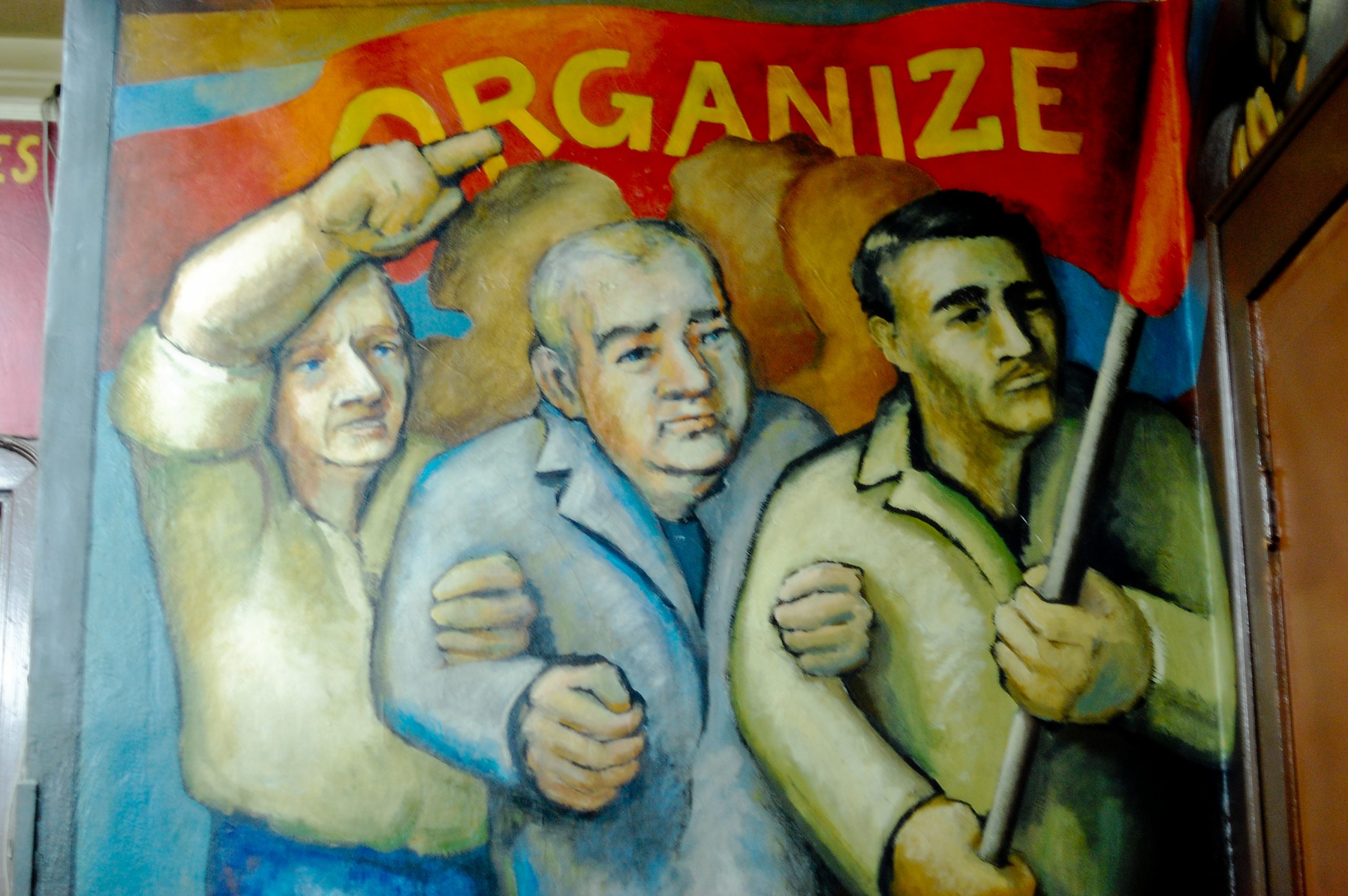
In recent years, the United States has witnessed a resurgence of worker activism. From high-profile organizing efforts at major corporations like Starbucks, Amazon, Wells Fargo, and Apple to a nationwide surge in strikes, workers are increasingly demanding not just better wages, but a greater voice in their workplaces. Recent data underscores this shift: the National Labor Relations Board (NLRB) reported a 27% increase in union election petitions in 2023, reaching 3,286—more than double the number from 2021. Meanwhile, the Cornell ILR Labor Tracker found that both the number of strikes and the number of workers involved in strikes have risen for three consecutive years.
This surge in unionization and collective action is not simply about wages—nor do unions exist solely to raise pay. While fair compensation is necessary for meeting basic needs, workers seek more than financial security; they want dignity, respect, and a sense of purpose in their jobs. A job may offer competitive wages and career prospects, yet if workers feel like mere cogs in a machine—excluded from decision-making and disconnected from any sense of agency—it fails to meet the standard of a “decent job.” Economic security alone is insufficient; workers also demand a say in shaping their work environments.
At its core, this wave of labor activism reflects a fundamental demand: workers want a voice. While individuals enjoy rights as citizens in democratic societies, those same rights often disappear within firms and corporations, where workers are treated as labor inputs rather than active participants. Yet, they do not just sell their labor—they directly contribute to the capital and success of their organizations. Despite this essential role, they remain excluded from the very decision-making processes that shape their work and lives. Worker voice is not just an abstract ideal—it is a cornerstone of workplace democracy and a fundamental pillar of economic democracy.
The growing demand for worker voice is reshaping traditional definitions of job quality. While fair pay and benefits are essential, work is also a source of meaning and fulfillment, enabling individuals to build careers and pursue aspirations. However, true job quality extends beyond material security and career prospects; it must foster respect, inclusion, and agency in the workplace. Although researchers have increasingly recognized dignity and respect in job quality frameworks, these efforts remain incomplete if they do not address the structural exclusion of workers from decision-making. A truly good job is not just one that provides economic stability and mobility—it must empower workers with a meaningful voice in shaping their workplaces and futures.
Developing and Refining a Measure of Worker Voice
Against this background, a group of researchers from Cornell and MIT collaborated to explore the relationship between worker voice and job quality. Past research suggests that individuals are more likely to experience higher job satisfaction, improved well-being, and lower turnover rates when they have access to decent jobs. Extending this idea, we hypothesized that these positive outcomes should also manifest when workers possess a strong voice in their workplace.
However, we observed that traditional measures of worker voice, such as opinion groups or unions, often fail to capture the deeper power dynamics between labor and capital. The existence of formal voice channels does not necessarily translate into meaningful influence if workers lack substantial power relative to management. Recognizing this limitation, we sought to develop and refine a new measure of worker voice—one that accurately reflects these power dynamics and offers a deeper understanding of how voice operates and its impact on workers’ attitudes and experiences.
Additionally, we recognized that workers experience voice differently depending on the areas in which they are allowed to express themselves. For instance, while workers might have some influence over issues like pay or scheduling, they may lack the power to shape broader organizational decision-making. Are management teams genuinely seeking input from workers on critical issues such as product development or business strategies, or are these areas treated as exclusive managerial prerogatives? Conversely, even if management frequently engages with workers on organizational concerns, workers may find themselves excluded from negotiations over bread-and-butter issues like pay and benefits. Despite the extensive body of research on worker voice, little attention has been given to addressing these critical nuances.
To tackle these gaps, we set out to achieve two primary objectives. First, we developed a measure of the worker voice gap, capturing the difference between the level of influence workers currently have and the level they believe they ought to have. This measure sheds light on the disparity between workers’ expectations and their actual ability to influence workplace decisions. Second, we distinguished between the categories of concerns workers typically raise. These concerns fall into two broad areas: issues directly related to workers’ own interests, such as compensation and working conditions, and issues tied to broader organizational interests, such as enhancing firm performance or improving operational strategies. By addressing both dimensions, our research provides a more comprehensive understanding of worker voice and its role in shaping job quality.
Findings
We conducted a survey using Prolific, an online social survey platform, and gathered responses from 1,307 participants in the United States. Our aim was to investigate whether, and to what extent, two distinct types of voice gaps—the worker-issues voice gap and the organizational-strategy voice gap—correlate with conventional measures of job attitudes and well-being. These measures included job satisfaction, intention to leave a job, burnout, and psychological well-being.
Additionally, we included an item to assess respondents’ attitudes toward union representation: “If an election were held today to decide whether employees like you should be represented by a union, would you vote for the union or against the union?” Support for unionization is not only an important dimension of job attitudes, but it also provided a way to examine how voice gaps may influence behavioral consequences in the workplace.
Our findings indicate that, even after controlling for other dimensions of job quality, a larger voice gap is statistically associated with lower job satisfaction and psychological well-being, as well as higher levels of burnout and turnover intention. Moreover, the worker-issues voice gap had a stronger and more significant effect on these outcomes compared to the organizational-strategy voice gap. This suggests that voice related to workers’ immediate concerns, such as pay and working conditions, plays a more critical role in shaping job attitudes and well-being than voice related to broader organizational objectives.
We also found that a larger voice gap significantly increases workers’ interest in joining a union. This pattern was particularly driven by the worker-issues voice gap, aligning with the broader trends observed in our findings. Furthermore, these results remained robust regardless of whether the survey response options included only “yes” or “no” or also offered “don’t know” as an option.
This finding highlights why workers are demonstrating greater interest in unionization than ever before: they feel powerless to negotiate for the pay and benefits they believe they deserve. For union leaders, this presents a critical opportunity to strengthen their engagement with workers by addressing these specific concerns and advocating for issues most directly tied to workers’ immediate needs, such as fair compensation and improved working conditions. By focusing on these fundamental issues, unions can better position themselves as a vital mechanism for workers to reclaim their voice in the workplace.
Although our findings show that the organizational-strategy voice gap is not significantly correlated with variables such as job satisfaction and well-being, we do not interpret this as evidence of its lack of importance. In fact, getting the wisdom workers bring to how they perform their jobs has been shown to enhance the design and implementation of new technologies. Therefore, our study has important implications for managers as well, highlighting the need to consider worker voice not just as a matter of fairness, but as a strategic advantage in improving organizational effectiveness.
What Do American Workers Deserve?
While Americans often associate worker voice with union representation or worker participation, there are many institutionalized forms of worker voice globally that are less familiar in the United States. For example, works councils and codetermination rights in Germany, as well as various models of social dialogue across Europe, provide structured mechanisms for workers to engage in corporate decision-making and even influence government policies.
However, these concepts are not entirely foreign to American industrial relations. A notable example is the Kaiser Permanente Labor Management Partnership—one of the most significant experiments in collaborative labor-management relations in the U.S. Through this initiative, workers and management have sought to approximate aspects of works councils or codetermination, fostering a more cooperative approach to workplace governance. The partnership has yielded consistent positive financial results, improved the quality of health care delivery, enhanced worker satisfaction, and positioned Kaiser Permanente as a leader in implementing electronic medical record technologies.
We call for renewed attention to worker voice as a key dimension of job quality—one that extends beyond fairness to reshape workplace power dynamics. Beyond wages and working conditions, workers should have a meaningful say in broader organizational decisions, recognizing them as active economic citizens rather than passive employees. If democracy is to extend beyond the political realm, it must reach the workplaces where people spend much of their lives. Embracing worker voice as a central pillar of economic democracy challenges traditional corporate hierarchies, positioning workers as the true creators of value rather than mere inputs in production.
Dongwoo Park is a Ph.D. Candidate at the Cornell ILR School, where he researches comparative employment relations, political economy and labor sociology.
This article is adapted from Yaminette Díaz-Linhart, Thomas Kochan, Arrow Minster, Dongwoo Park, and Duanyi Yang, “Does Voice Gap Influence Workers’ Job Attitudes and Well-Being? Measuring Voice as a Dimension of Job Quality.” British Journal of Industrial Relations. Published online December 18, 2024, https://doi.org/10.1111/bjir.12866
Image: “Organize!” by Eric Allix Rogers (depicts detail of mural in United Electrical Workers (UE) Hall, 37 S. Ashland, built 1905), https://flic.kr/p/7ood1D