
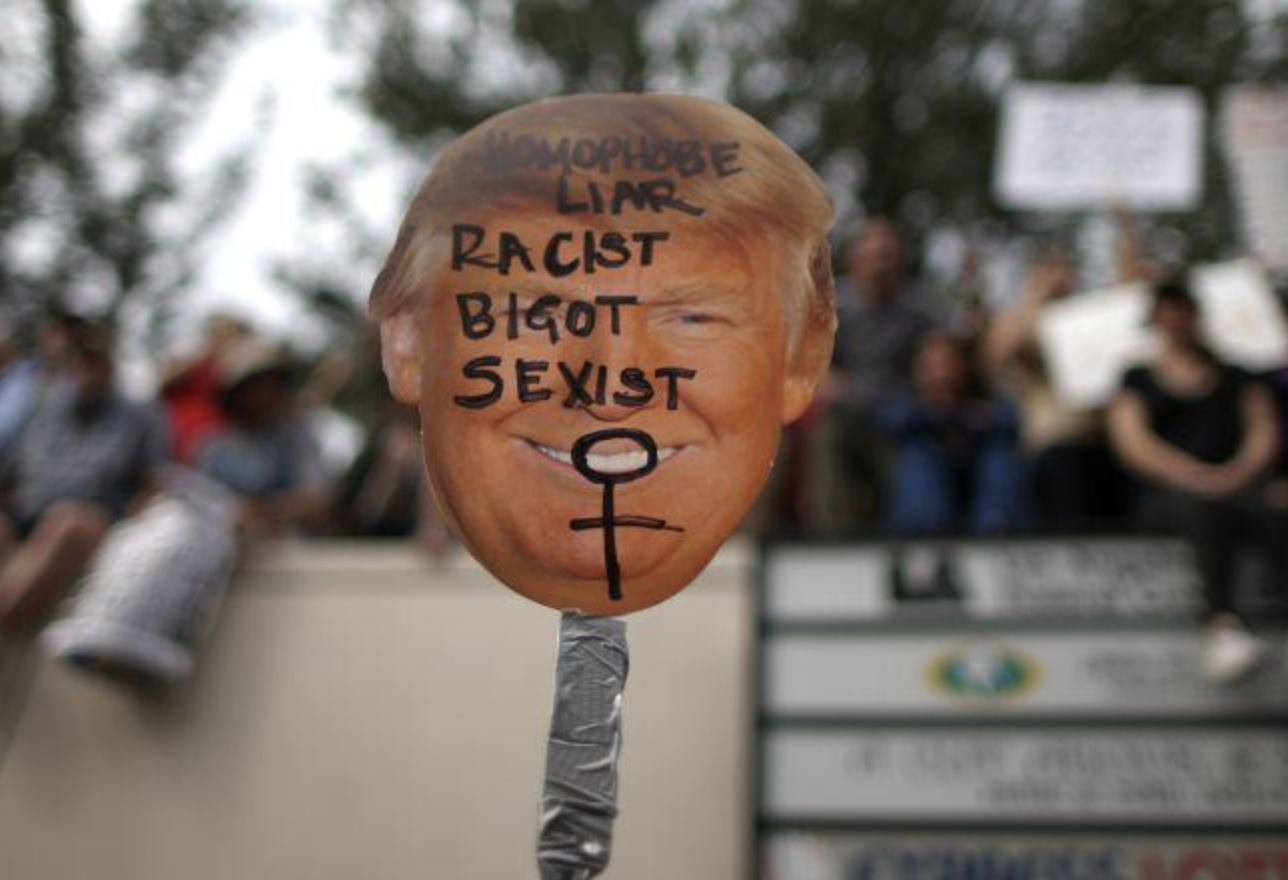
For decades now, political regimes have been veering toward extreme nationalism and neofascism. A horde of authoritarian regimes, from Russia to Hungary, Poland to India, Brazil to Egypt, the Philippines to Turkey, to cite some of the most egregious examples, have increasingly achieved victory across the world, particularly in the aftermath of the 2008 financial crash. This trend has only been confirmed further by the recent re-election of Donald Trump in the United States, with the Republican Party even winning the popular vote for the first time since 1988. Trump’s efforts since have been nothing short of an oligarchic coup d’etat focused on dismantling constitutional democracy.
This might seem like an abstruse phenomenon. In our democratic age, an age with full knowledge of the horrors of the previous century and the authoritarian regimes that brought those horrors about, the rise of these regimes appeared impossible to most. We were seemingly safe in the Lewisian knowledge that it simply could not happen here. And yet Windrips and authoritarian figures of multiple stripes have returned with a vengeance in contemporary capitalist societies: resuming a one-sided class war against working people, perpetuating wealth inequalities on a global scale, and repressing all means of resistance.
The Dutch Marxist theorist and astronomer Anton Pannekoek responded to similar challenges in his own time. With the rise of the Nazis in Germany and Mussolini’s Fascist Party in Italy and the Soviet Union’s own government assuming an unmistakably authoritarian form, Pannekoek set out to make sense of these developments in his 1936 article ‘The Role of Fascism’. Rather than a departure from the functions of capitalist enterprise, Pannekoek argues this form of government corresponds entirely to the needs of modern capitalism. For him, authoritarianism comes about when the capitalists’ means of production is most threatened by proletariat revolution. In fact, authoritarian regimes emerged in Pannekoek’s day in the immediate aftermath of the Wall Street Crash – a time when the market economy was being called into question on a wide scale and social revolution was becoming ever more inevitable. Capitalism, completely unable to resolve its structural contradictions, recognises this, “realizes that the workers, starved by unemployment, must rise and will rise in revolts.” (294) Its new strategy therefore is to forestall this impending revolution; it endeavours to fortify its own position, “forging the whole capitalist class into one strong unity”, “putting the state power in strong armour” and “robbing them [the working class] of their old means of defence, [namely] their Socialist spokesperson and their organisations.” (294-5)
Pannekoek reminds us that when capitalism fails to fool the workers “by means of sham democracy and sham reforms”, it inevitably turns the other way: “to heavy oppression.” (295) It does so not of its own free will but is compelled “by material, economic forces inherent in its innermost nature: by the heavy crises which endangers its profits and arouses its fears for revolution.” Financial crises are in many ways fertile terrain for such authoritarianism to grow.
But the power of authoritarian parties lies also in their ability to seduce and draw a large number of workers with them. While those still intent on fighting the inhuman machine are suppressed with an iron fist, the members of the working class that favour peace over class war are “offered” an “appropriate place in the nation as members of [a] united nation not as a separate class.” (294) The working class, then, gives up its revolutionary arms for an artificial sense of belonging to a nation state – even though this nation state is completely indifferent to its true concerns.
This is too what we are seeing in many capitalist societies across the world. In the aftermath of the market crash of 2008-09 – an eerie sequel to the crash that took place in Pannekoek’s own lifetime – ultranationalism found broad political legitimation and mass support which it had not seen in decades. In fact, many of today’s most prominent far-right political parties, such as Lega Nord in Italy, the Alternative for Germany, the Alternative for Germany, or the Norwegian Progress Party, were “children of financial crises.” Even beyond the continent of Europe, it was the Obama administration in the United States which authorised major bailouts for financial institutions that set the stage for Trump’s own rise to power.[1]
And yet despite this seemingly dire situation Pannekoek points us defiantly towards hope. Indeed, now that the major political parties have confirmed our suspicion that their interests lie with the economic elites and shown themselves to be completely indifferent to the true needs and concerns of working people, the working class is forced to confront its situation without mystification, without the political establishment (with its “ready-made opinions and platforms”) doing the thinking on its behalf. When the burden of fascist capitalism makes itself too heavily felt, the oppressed is forced to “think out and to find out the way for itself.” It can no longer rely on political parties for its direction, those that dimmed the light of class consciousness; its “class unity, class action will be paramount, party opinion subordinate.”
Inevitably, however, we need to go beyond Pannekoek’s revolutionary program. We cannot be satisfied with a class struggle narrowly defined. We must also merge the struggles of other oppressed groups who are similarly exploited and marginalised under the present regime. The struggle for women’s rights, minority rights and LGBTQ rights must all be conceived as a mutual struggle against the fascist and capitalist forces which leave only devastation in its wake.
Though we fear we are dreaming the same nightmare twice, having been inexorably drawn back into the political theatre of the 1930’s and 1940’s, we must recognise that the possibility of an anti-fascist and radical alliance, one that brings together revolutionary actors that were previously and wrongly conceived as mere footnotes to the mainstream narrative of class struggle, is greater now under our present conditions than it was in those so-called revolutionary decades. Such is the case because no minority experience or struggle will be denied visibility or voice. These reactionary social movements which threaten to return us to an antiquated and authoritarian past will be met with a revolutionary one of greater force, one that will propel us into a more egalitarian, more democratic future. If, in this confrontation, the project of authoritarianism is, as Pannekoek illustrates, “the salvation action for capitalism”, ours will be each other.
[1] There is no doubt that other factors played an equally decisive role. The impact of globalisation, rising inequality, and the refugee crisis of 2015, are no doubt contributing factors. However, following Manuel Funke and Christoph Trebesch, we cannot fully understand the rise of the right without considering the financial crises of 2008 and 2011/12 respectively.
Image: A protester holds a sign during a march and rally against the election of Republican Donald Trump as President of the United States in Los Angeles, California. Photograph: Lucy Nicholson/Reuters, available at https://im.rediff.com/news/2016/nov/14protest01.jpg
Reece Rogers has recently graduated from the University of Warwick with an MA in Philosophy and the Arts. His main areas of interest include utopian thought, the relationship between art and politics, and social ecology.