
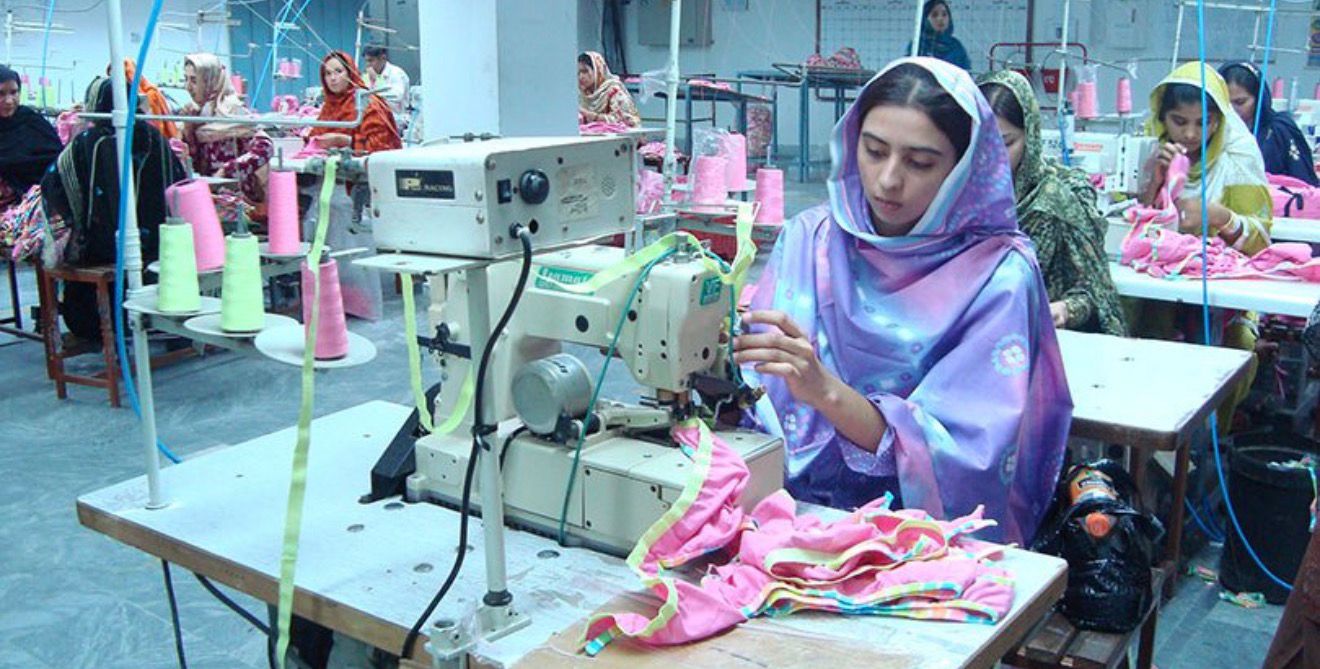
In my book Women and Class Struggle (English translation forthcoming December 2025), I explore the historical, social, and class-based connections between Pakistan’s trade union movement and women’s rights activism. At first glance, these two areas may appear separate: trade unions are largely male-dominated, while women’s movements, often led by elite women, focus on patriarchal and gender-based oppression. My work situates these movements within a unified Marxist-class framework, particularly highlighting the struggles of women working in the informal sector home-based and domestic workers whose labor is often invisible in mainstream accounts.
Liberal and descriptive research often addresses these issues superficially. NGO-produced literature, while methodologically sophisticated and attentive to women’s voices, frequently reflects global agendas and funding priorities. Meanwhile, traditional trade union research in Pakistan remains rudimentary, rarely moving beyond basic documentation of male-dominated labor struggles. I sought to fill this gap through a Marxist lens, combining historical data and dozens of interviews to show that women’s underrepresentation is not simply a result of male dominance in unions but also deeply rooted in patriarchal, religious, and cultural structures.
I argue that women’s engagement in the informal labor sector emerged precisely because traditional trade unions failed to address their needs, and global neoliberal agendas created both constraints and opportunities for NGO-led activism. In the 1980s, trade unions in the United States were dominated by white, skilled workers, leaving unskilled, women, and people of color to form their own organizations. These groups prioritized dignity, autonomy, and representation over wages alone. In the 1990s, as class-based politics waned, identity and human rights politics gained prominence, strengthening these alternative forms of organizing even as they became subtly integrated into global neoliberal priorities.
Global institutions, particularly the ILO and the WTO, and U.S. imperial influence, also affected labor and women’s movements in Pakistan, The weakening of the ILO and the rise of a neoliberal global economic order undermined traditional unions while privileging NGOs working with informal sector women. Yet, it is important to note that women’s focus on informal labor is not solely dictated by global funding or agendas; it also responds to local social necessities and practical realities.
Through historical research and interviews, I show that women are often discouraged from joining unions not only by male gatekeeping but also by family, partners, and social pressures. Activist NGOs, despite their progressive intentions, sometimes unintentionally reinforce barriers by shaping the terms of participation for women workers. Nonetheless, I demonstrate that trade union leadership is generally willing to include women, but structural constraints social, cultural, and economic limit their participation.
A central theme in my book is the relationship between women’s bodies and labor. Drawing on the works of Mao Zedong and Lucía Sánchez Saornil, I argue that women’s equal participation in productive labor, equal remuneration, and recognition of reproductive and bodily labor are essential for revolutionary transformation. Women’s labor is enmeshed in capitalism as a site of private property, production, and reproduction. Social reproduction, including domestic work and childcare, produces labor power as a commodity and ensures workers can continue earning wages. Without transforming these economic and social structures, women’s liberation remains incomplete.
Maoist feminism and Marxist theory also make it clear that women’s revolutionary freedom is not realized solely through productive labor but through autonomy, self-determination, and personal freedom. Patriarchal institutions like marriage and family exploit women’s bodies and reproductive labor, restricting their freedom. Addressing these constraints requires structural change, not only individual empowerment
My research highlights the intertwined nature of women’s movements, trade unions, global and local capitalism, NGOs, and patriarchal social structures. It provides historical and social insight while also emphasizing practical strategies: advocating for equal pay, ensuring women’s participation in productive work, and creating conditions for social and personal freedom. In line with Che Guevara’s insight that genuine revolutionary struggle requires love and humanity, I argue that revolutionary labor movements must also embrace these values to be fully transformative.
Ultimately, my book challenges prevailing narratives, documenting women’s historical and contemporary contributions to trade union activism in Pakistan. It exposes the limits of liberal feminist and NGO-driven frameworks, emphasizing a class-conscious, Marxist understanding of women’s labor. By situating women’s struggle within the broader political economy, I aim to make visible the structural, social, and economic obstacles women face and highlight strategies for achieving equality and genuine revolutionary change.
“Women and Class Struggle” is thus both a historical record and a call to action. It urges readers to rethink the role of women in trade union movements, to recognize the interplay of patriarchy, capitalism, and global agendas, and to pursue practical and transformative steps toward equality, dignity, and freedom for all workers, regardless of gender.
Ahmad Khan Nadeem is a PhD student of Sociology at the University of Toronto and the author of Women and Class Struggle: A Marxist Study of Pakistan’s Trade Union and Women’s Movements (Fiction House 2024). His work is also forthcoming in Critical Sociology. His research focuses on labor, feminism, and political economy in South Asia.